


 Deutsch
 русский

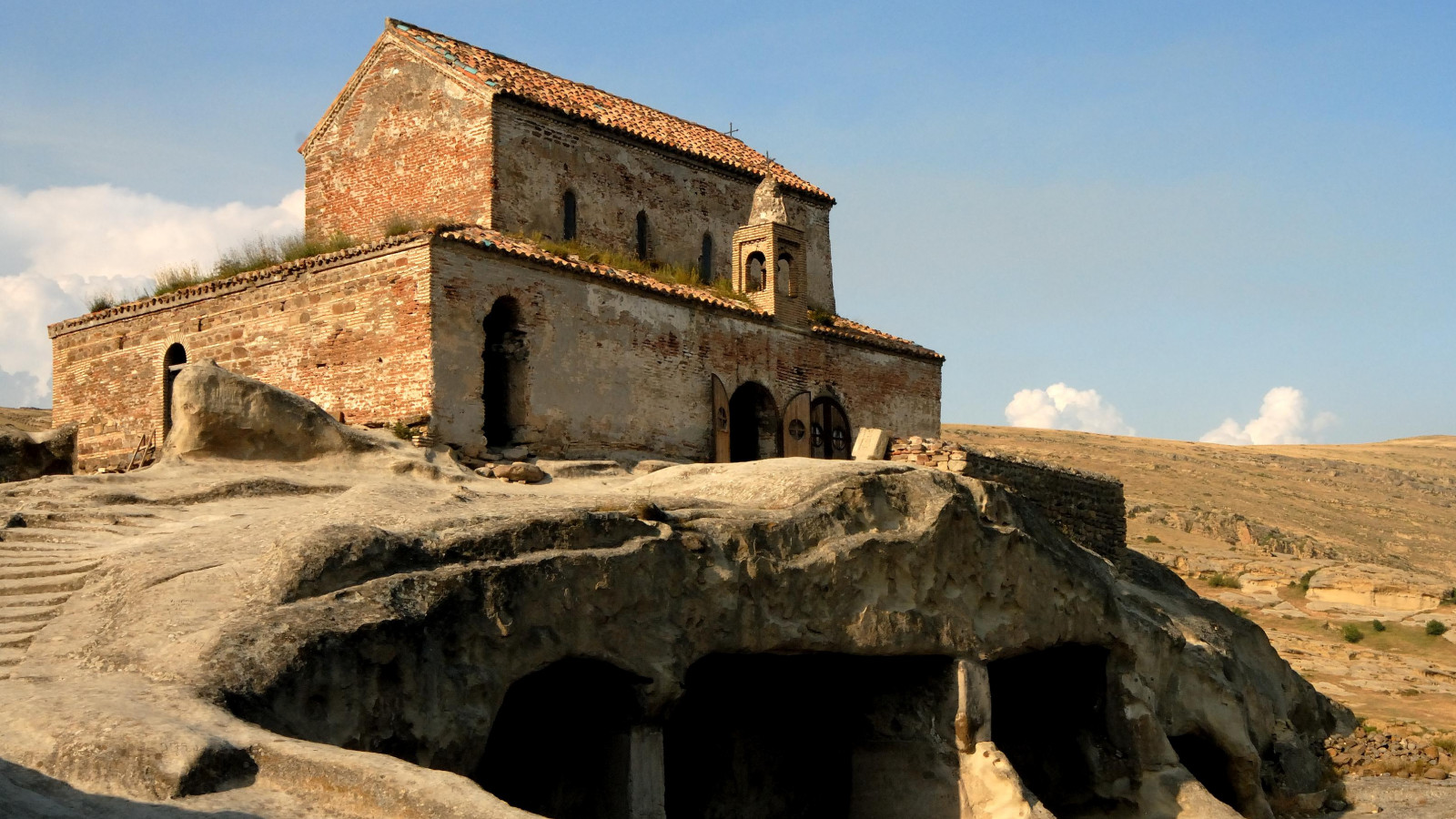
Near the historic town of Gori, rising above the quiet valley of the Mtkvari River, lies one of the most fascinating archaeological treasures in the Caucasus — Uplistsikhe. This remarkable ancient settlement, carved directly into massive sandstone cliffs, tells a story that stretches back more than 3,000 years. Walking through Uplistsikhe today feels like stepping into a forgotten world where ancient civilizations once lived, traded, worshiped, and built a unique culture between East and West. The name Uplistsikhe means “The Fortress of the Lord,” reflecting the city’s early religious importance. Archaeologists believe the settlement began to develop around the early Iron Age and gradually grew into an important political, cultural, and religious center. Long before Georgia adopted Christianity in the 4th century, Uplistsikhe served as one of the main centers of pagan worship in the region. Temples carved into the rock, ritual halls, sacrificial altars, and ceremonial spaces reveal how deeply spiritual life shaped the city. What makes Uplistsikhe truly extraordinary is its architecture. Instead of building structures with bricks or stones, its inhabitants carved homes, halls, tunnels, and streets directly into the soft rock. Over centuries, they created a complex urban layout with residential chambers, wine cellars, bakeries, pharmacies, storage rooms, and even an ancient theater. Some of the largest halls were supported by carefully shaped rock columns, giving them the appearance of classical architecture despite being carved entirely from stone. At its peak, Uplistsikhe functioned as a vibrant city along an important trade route that connected Europe and Asia, similar to the famous Silk Road. Merchants, travelers, and craftsmen passed through the region, bringing goods, ideas, and cultural influences from distant lands. Because of its strategic location, the city became an economic hub where different civilizations interacted. However, Uplistsikhe also experienced periods of destruction and rebuilding. Throughout its long history, the city faced invasions from various armies and suffered significant damage during the 13th-century Mongol invasions, which marked the beginning of its decline.
Today, Uplistsikhe stands as one of the most impressive historical monuments in Georgia and offers visitors a fascinating glimpse into the country’s ancient past. As travelers explore the narrow rock streets and mysterious chambers, they can imagine how thousands of people once lived within these cliffs. Among the most notable structures is the large central hall known as the “Queen Tamar Hall,” though historians believe it was originally a pagan temple rather than a royal residence. Nearby, visitors can also see early Christian basilicas built after Georgia officially adopted Christianity in the 4th century, showing how the city transformed during different historical periods. From the top of the rocky plateau, the view opens across the wide valley of the Mtkvari River, creating a dramatic landscape that combines nature and history in a truly unforgettable way. Today the site is protected as an important national monument and continues to be studied by archaeologists who regularly uncover new discoveries hidden within the rock. Visiting Uplistsikhe is not just a sightseeing trip; it is a journey through thousands of years of human history, where ancient engineering, spirituality, and daily life are preserved in stone. For travelers exploring Georgia, a visit to this extraordinary cave city offers a unique opportunity to connect with the deep cultural roots of the country while enjoying one of its most atmospheric historical landscapes. Whether you are passionate about archaeology, history, photography, or simply discovering unusual places, Uplistsikhe is a destination that leaves a lasting impression and reminds visitors how creative and resilient ancient civilizations could be when building their world directly into the rock.